Newport Fasteners
Gallery
Attributes
Distributor offers
| Seller | SKU | MOQ | In stock | Multiple | Prices |
|---|---|---|---|---|---|
| Zoro | G806329661 | 1 | -2 | 1 | 1 @ $315.51 |
Related on Amazon
As an Amazon Associate, we earn from qualifying purchases. (paid link) CERTAIN CONTENT THAT APPEARS ON THIS SITE COMES FROM AMAZON. THIS CONTENT IS PROVIDED 'AS IS' AND IS SUBJECT TO CHANGE OR REMOVAL AT ANY TIME.
5/16"-18 Two Way Reverisble Hex Locknuts/Steel/Zinc (Quantity: 3000)
Brand: Newport Fasteners
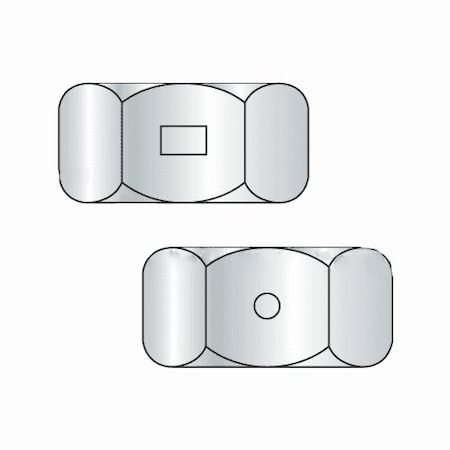
Two-way Reversible Lock Nuts - A two-way reversible lock nut is a hex nut with two or three, round or rectangular indentations, compressed onto the flat sides of the nut equal distances from each other. All metal lock nuts can be used in high heat or highly corrosive applications where a nylon insert would not be suitable. Bolts or Screws used with Two Way Reversible Lock Nuts can also be shorter than the nut, because the locing occurs in the center. For this reason, the end of the bolt or screw does not have to extend beyond the end of the nut. This is the least expensive prevailing torque type of nut, designed for use with machine screws and low-carbon bolts (or 18-8 screws with the stainless nuts). It allows for automatic assembly because the top and bottom of the nut are identical. It creates a locking action even without being fully threaded onto its mating screw.
Details
- Two way Reversible Lock Nuts (also known as Centerlock Nuts) get their name because of their functionality and ability to be used either top-up, or top-down.
- wo Way Lock Nuts feature indentations on the outside flats of the nut, distorting the internal threads to increase resistance on the mating part. This creates a locking mechanism in the center of the nut.
- Having the locking portion within the hex nut offers several benefits including versatility in application, speed of application (which helps on assembly lines), and application environment versatility.
- Screw Size-Thread Pitch: 5/16"-18
- The compressions create slightly distorted center threads resulting in a controlled locking action when the threads of the mating part become engaged.